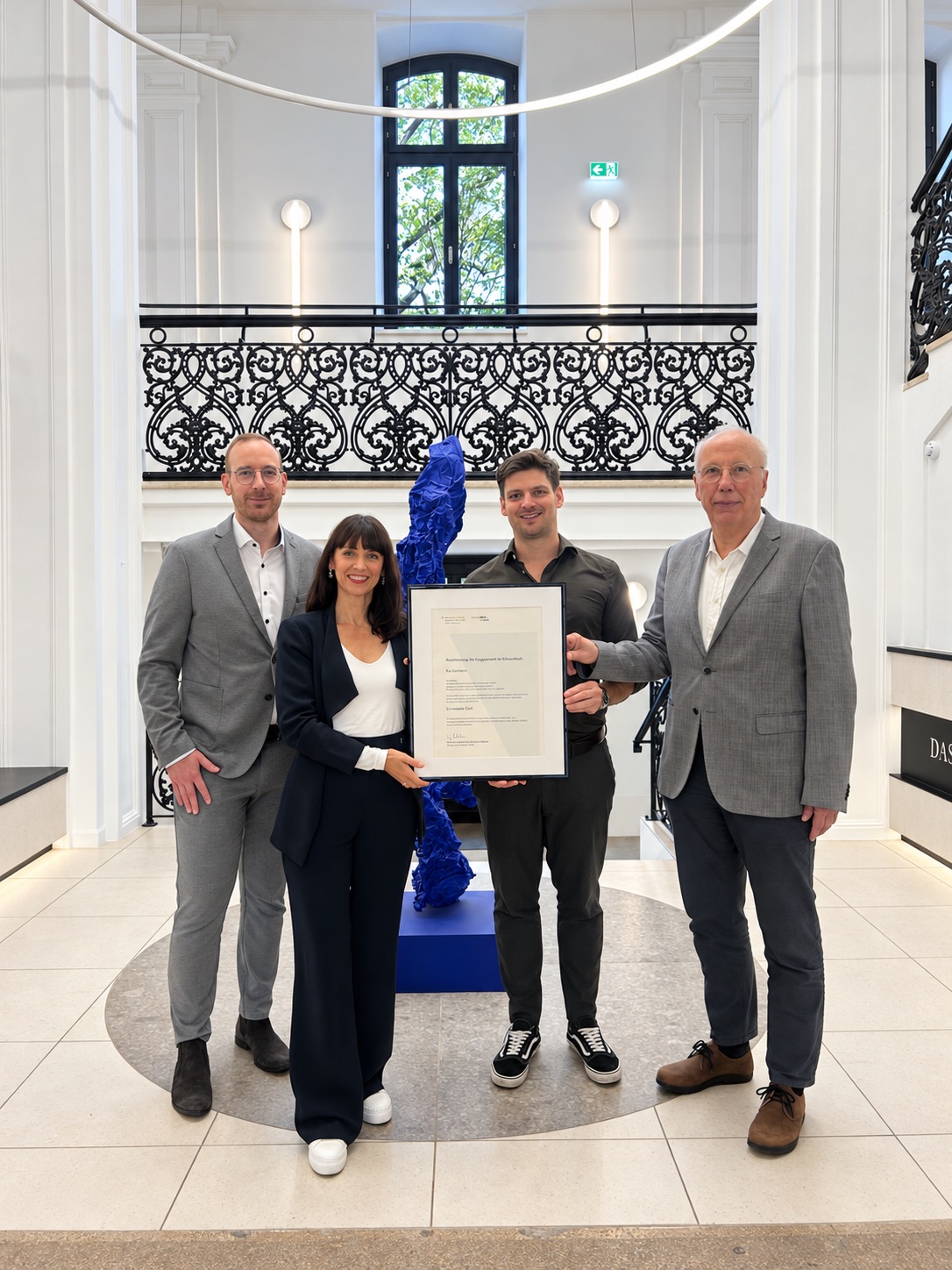
On October 13, 2026, Das Artmann was awarded the klimaaktiv GOLD certificate. The certificate was presented at a ceremony by the auditor and expert partner bauXund. For Cuubuus architects & developers, the award is recognition of the comprehensive renovation of this historic residential building.
Heating and Cooling Using the Danube Canal
The Danube Canal runs right in front of the building. A connection to the canal was created beneath the street. The water drawn from the canal is channeled to the energy center in the basement. There, heat pumps use the water from the Danube Canal as an energy source for heating, hot water, and cooling.
The heat generated while cooling the apartments is also incorporated into the energy concept: it can be reused to heat water. In this way, heating and cooling in the building are considered together. The City of Vienna cites Das Artmann as a showcase project for heating and cooling with water from the Danube Canal.
All apartments are equipped with cooling systems. This ensures comfortable indoor temperatures in the summer and demonstrates that climate protection and living comfort can go hand in hand. The cooling system uses a renewable energy source and is part of a holistic energy supply concept.
More than twice as much photovoltaic capacity as required
A photovoltaic system with a capacity of nearly 65 kWp was installed on the roof. The capacity required by building authorities was approximately 30 kWp. The installed system is thus more than twice as powerful as the minimum required by building authorities and generates a portion of the electricity needed to power the house. The remaining electricity needs are covered by a green power contract.
The energy supply system thus combines the use of water from the Danube Canal with the company’s own electricity generation and green power. This makes Artmann largely independent of energy crises.
A Closer Look at Materials and Indoor Air Quality
Sustainability was also a key consideration in the selection of building materials. The materials used were tested and had to meet the requirements of the klimaaktiv standard. Indoor air quality tests were conducted in all apartment types to assess indoor air quality and identify any potential exposure to volatile organic compounds (VOCs) from the materials used. In addition, all apartments are equipped with a controlled ventilation system.
In the building’s underground parking garage, in addition to parking spaces already equipped with charging points, the technical infrastructure has been set up to allow all parking space owners to charge their electric cars using load management systems.
A building designed with the future in mind
In the case of Das Artmann, the focus was not limited to the immediate renovation. Life-cycle assessments also take into account how a building can cope with changing climatic conditions over its useful life.
This is particularly relevant for the existing building stock: The European Environment Agency estimates that more than 85 percent of today’s buildings will still be in use in 2050. At the same time, emissions arise not only from a building’s subsequent operation but also from the production and processing of building materials. A scientific analysis of more than 650 life-cycle assessments estimates that these so-called “gray emissions” account for an average of about 20 to 25 percent of total life-cycle emissions for buildings that meet current energy standards.
The klimaaktiv building standard evaluates buildings based on defined criteria, including energy, building materials, location, comfort, and health. The Gold certification recognizes the quality achieved within this comprehensive evaluation system.
“Implementing the requirements of the klimaaktiv GOLD standard in a historic, listed building requires particularly careful coordination among all parties involved. It was crucial to coordinate the necessary measures early on, integrate them into the contracts and construction processes, and ensure their actual implementation.” DI Mathias Auer, Construction Project Manager at CUUBUUS architects & developers.
Responsibility for Real Estate Across Generations
For CUUBUUS, a commitment to innovation, the sustainable use of resources, and the goal of building real estate that will last for generations are all part of the company’s philosophy. Especially in light of climate change, real estate development carries a special responsibility. “With Das Artmann, we aim to fulfill this responsibility by preserving a historic building, comprehensively renovating it, and combining energy efficiency, sustainability, and living comfort.” Mag. Patrizia Hunter, COO at CUUBUUS architects & developers
“Building retrofitting is a key component on the path to climate-neutral buildings,” says bauXund Managing Director Dr. Thomas Belazzi. “The conversion of this building, constructed in 1866, into a high-quality residential project further extends the useful life of this approximately 160-year-old property. We are pleased that bauXund has now successfully completed the klimaaktiv GOLD audit.”
Auditor Michael Kopp, MSc, emphasizes the importance of preservation: “At least 50% of a building’s energy consumption during construction is used to erect the shell.” Extending the service life of buildings is therefore—just like the use of renewable heating and cooling systems—a very important contribution to climate protection. Artmann has successfully implemented both in a historic building. That is a remarkable achievement.”
The klimaaktiv GOLD award recognizes the quality of the project. At the same time, the Artmann embodies an approach that views the existing building stock as an important part of the future of construction.
Are you interested in learning more about the Artmann project?