From A for Acquisition to Z for Civil Engineer—everyone on our team shares a passion for construction, design, and architecture. In our “CUUBUUS career” series, employees share behind-the-scenes insights. This time: our (so far only) woman on the CUUBUUS architecture team, A conversation about revitalization, gallows humor, and why Grandma from the Waldviertel remains completely unimpressed by real estate trends…
In today’s episode, we’re talking with
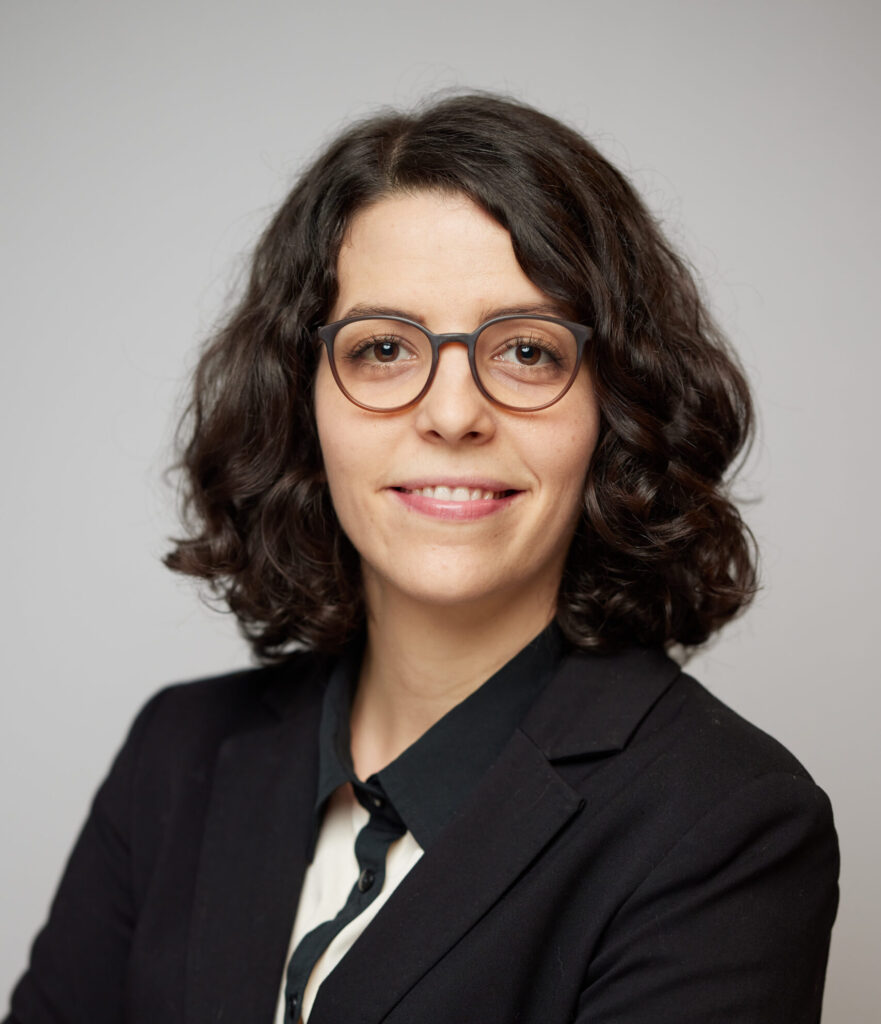
BIANCA BARNARD, ARCHITECT
Ms. Barnard, tell us a little about yourself… Where are you from, what do you do, and what kind of education did you receive? Have you always wanted to be an architect?
I have roots in the Waldviertel region; I was born in Vienna and grew up in a suburb of Vienna before moving back to my hometown in 2016. After many detours—including various educational paths and career fields, as well as a year abroad in New Orleans, a city that further shaped my love for architecture (especially historic architecture)—I ultimately landed in my dream job as an architect. Even as a child, I enjoyed drawing floor plans and have always had a good sense of spatial awareness.
You’ve been with the company for almost exactly a year. Time for a reality check 😉 What’s it like working at CUUBUUS? What are the projects like—have your expectations been met, or have you had to revise any assumptions? Are there any areas that have pleasantly surprised you? And what, if anything, have you become disillusioned with in the meantime?
I’ve worked at other architecture firms before—both small and large—but nowhere else has the sense of family and team spirit been as strong as it is at CUUBUUS. Recently, my best friend asked me how I manage not to turn back on my way to work. The answer is simple: a job you’re passionate about—as hard and thankless as it can sometimes be—and coworkers you look forward to seeing every day. We support each other, and despite the various hurdles we face, we never run out of humor 😊
Renovations are always a special challenge, but I think that’s exactly what makes them so exciting. With our “DAS ARTMANN” project, there’s the added complication of having to take two different construction phases into account: one from the 1870s and the other from the 1990s—so it’s essentially a project within a project. This, in turn, means we’re appealing to a broader clientele. I’m also the only one on our architecture team working exclusively on this project, so I take on a sort of coordinating role to ensure everything runs smoothly.
How and where did you hear about the job posting? Had you heard of CUUBUUS before?
There wasn’t actually a job posting in that sense, but, as often happens in life, I ended up at the company thanks to our observant CUUBUUS founder, who learned about my specialization in historic preservation and renovation —and CUUBUUS happened to be looking for support for its revitalization project at exactly that time.
Tell us about a typical workday—are the routines essentially the same every day, or is no two weeks alike?
With such a tight schedule, there’s actually a clear plan for what needs to happen and when. As we all know, reality is different, and almost every day brings surprises. In theory, I keep a to-do list, but in practice, those very items usually have to wait a bit because, of course, the urgent matters take priority first.
In the morning, we discuss what absolutely must be done today. Consultants are brought in, meetings are held, planning is an ongoing process, sales plans are updated… As a creative person, I also enjoy taking on additional design tasks, such as handling the layout of brochures, designing portfolios, creating visuals for construction site advertising, etc., which I really enjoy.
And what personal skills do you need to have to do a job like yours? What technical skills are essential, and what qualities are nice to have?
Humor, lots of humor—especially dark humor! 😉 And patience.
Common sense and forward thinking are just as important. No matter how much formal training you have, if you lack logical thinking, you’re doomed to fail in this profession, in my opinion. Unfortunately, the architecture program at TU Wien tends to be (too) little practice-oriented, but fortunately, you pick up the technical knowledge over time in your day-to-day work, and as we all know, you can always look up the OIB guidelines and standards at any time 😉
Speaking of the team: How does it feel to be the youngest (not in terms of age, but in terms of when you joined—the “newest”) employee? And how do you feel being the only woman among all your male colleagues?
I really can’t complain at all! Here, it doesn’t matter how old you are or where you’re from… you’ve just got to have the right sense of humor 😉 Even during my first week on the job, it felt like we’d known each other forever—and that says a lot 😊—and after a year, things are still just as great!
In general, the industry still tends to be male-dominated. Why do you think that is?
Technical professions have always been typically male-dominated… but fortunately, that has changed over time. In my architecture program, the ratio was about 50:50—if not even more women. So I’d say that’s a positive trend!
With an average project duration of at least 18 months, you end up working on the same project for quite a long time. Is that a curse or a blessing?
Both in equal measure?😉 Joking aside… Things aren’t the same every day; we’re constantly working on different areas, which keeps things exciting. Every project evolves, and it fascinates me anew every day just how quickly everything actually moves. No sooner are the formwork plans approved than they’re already being implemented on the construction site. In my opinion, 18 months could easily be longer in this industry 😉
What do you find most exciting about your job? And what moment always makes your heart race or brings you a sense of personal happiness?
According to my colleagues, the greatest sense of fulfillment comes when the project is completed. Until then, it’s a roller-coaster ride. But it’s precisely this challenge—the unpredictability—that makes the job so exciting. You might think every project is the same, but it isn’t.
A quick note on the real estate industry and architecture in general: To what extent do you think the planning, construction, development, and design of housing have changed over the past ten years?
That definitely depends on the target audience. Real estate prices have skyrocketed; new buildings are getting smaller, but their floor plans are, in turn, being designed in more sophisticated and efficient ways. Right now, Vienna is experiencing something of a “construction boom”—construction is happening on every corner, vacant lots are being filled, and former industrial sites are being transformed into new, mostly car-free residential neighborhoods and developed sustainably… Personally, I’m curious to see how the situation will unfold over the next 10 years, because by then most vacant lots in Vienna will likely be built on, and renovating existing buildings will become even more important. As a self-proclaimed “revitalization fan,” I naturally believe that much more should be done in this direction—not least because our resources are becoming increasingly scarce and expensive. Furthermore, a city’s character should not lose its distinctive identity. A welcome development (for me) in the coming year will be the expansion of the Historic Preservation Act, which will broaden the scope of ensemble protection.
In your opinion, what will our living situations look like in the future? Are there any trends already emerging, and can we identify any developments?
For a long time, the trend was for many people to move to the city. However, the pandemic has reversed this trend, as working from home has created many new job opportunities and fields, and the desire for self-sufficiency—driven by both quality-of-life and financial considerations, such as rising inflation—has become a hot topic. A good example is my grandmother, who lives deep in the Waldviertel region and has a huge garden with vegetable beds, fruit trees, and a greenhouse that provides organic potatoes, carrots, beets, and apples all year round—she hardly notices the rising prices at all.
And to wrap things up, may I ask you a very personal question: Is your home immediately recognizable as an “architect’s apartment” at first glance?
It depends on what you mean by an “architect’s apartment” 😉 My guests always say how cozy my place is. The colors go well together, and there are lots of houseplants and mementos from my time in New Orleans and my life so far.
A lovely closing remark… I wish you continued success, and above all, thank you very much for these fascinating insights!