The best people to describe what a typical workday at CUUBUUS is like, what skills you need, and what makes the real estate industry so fascinating are the very people who work there day in and day out.
In the first episode, we talk with
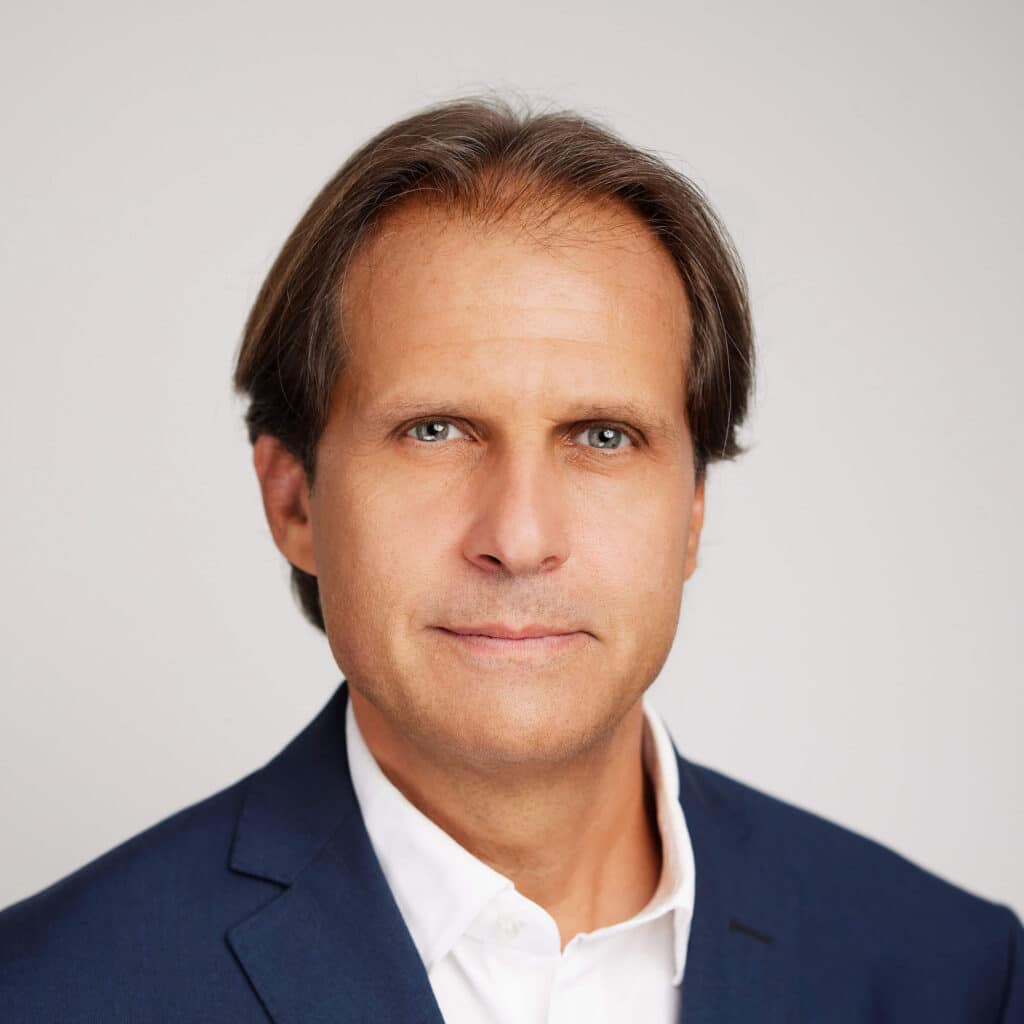
Gernot Zuckerhut, Architect.
There are numerous stereotypes surrounding the architectural profession. The ideas that
people outside the industry have about your work are sometimes even completely contradictory—ranging from creative artist to meticulous technician with a knack for numbers… Mr. Zuckerhut, this is your chance to dispel the common clichés. Tell us: do you really only have black turtlenecks in your closet? And how many all-nighters, design plans, and cups of coffee does it actually take to complete a turnkey home? Or to put it another way: How much truth is there in the stereotypes of the “typical” architect?
The profession of architecture is very diverse and thrives on the tension between art and
technology. As an architect, however, you’re also allowed to be a bit of a do-gooder—at least that’s how I see it
. People feel more comfortable in a well-planned, beautifully designed building.
Architecture that exists solely for its own sake and does not serve people is too one-dimensional for me.
That’s how I feel about black turtlenecks, too—wearing the same one every day would be too boring for me.
However, white and black are important design elements in art and architecture
. They serve as the canvas against which colors stand out all the more, and in the
case of architecture, it is, for example, sunlight that brings life into and onto the building.
Specifically: What are your responsibilities, and what does a typical workday look like on the architecture team at CUUBUUS?
The task is concrete and, day after day, involves drawing from a multitude of requirements,
regulations, rules, technical necessities, and the client’s wishes to develop solutions
that take all of these into account while still representing something new and exciting.
You’ve been with CUUBUUS since 2005. How did you come to join the company, and what exactly sets CUUBUUS apart from other real estate developers?
By chance—that’s just how life goes… Actually, after college, I spent most of my time working abroad (the U.S., Japan), most recently in Sydney. For family reasons, I returned to Austria for a while, planning to go back to Sydney. Things turned out differently, as you can see, but I don’t regret it, because I’ve always appreciated the versatility at CUUBUUS. At CUUBUUS, it’s always been about architecture and the fascination with elegance in design, but we don’t want to produce works of art—we want to create functional buildings. That shouldn’t be a contradiction, and that’s what makes the work so exciting.
What education and skills are required to fill your position? Are there people who have switched careers, or is a degree in architecture essential to succeed in this field?
In any case, one should be able to empathize with others; this is important in addition to
technical and legal training—which is, after all, required by law.
It can sometimes take years from the first sketch to the handover of the keys. As an architect, are you involved right down to the final decision on where to place the outlets, or is your job done once the floor plan has been approved?
There are all kinds of possibilities… But if you want the ideas you’ve had to actually be implemented
, you have to make the effort to be involved every step of the way—from the design phase, through the construction site, all the way to the
very last outlet—and fight to ensure quality in the execution.
After all, it is also our job as architects to think everything through “practically”—with the future
user in mind—and thus get the most out of it.
What advice would you give to a young person who wants to become an architect? What are the challenges and opportunities in this profession?
Give it a try and go for it! There are many people who studied architecture but later went on to work in other professions
—and that has a stimulating effect on society.
Speaking of your dream job: Which project in your career so far has been the most fulfilling for you?
It may sound cliché, but every project is like a child to me—one I’m happy to see
grow up, that is, as it’s being built. Some turn out better than others, but
they’re all close to my heart. The best compliment, though, is when someone who’s lived in one of our homes for a while
tells me how comfortable they feel there.
And what is every architect’s nightmare?
People with blinders on who think architecture is all about whether they personally like or dislike something
. Taste is one thing—and, as we all know, that’s a matter of opinion 😉
But there’s also an overarching responsibility—including to future generations—
to create livable housing.
In your opinion, how has housing—or the architecture and real estate industries—changed over the past ten years?
The constraints imposed by technical standards and building codes are becoming ever tighter. Up to a certain point
, this serves as an incentive and a challenge, and since these laws are designed to protect
people, they do serve an important function.
However, there are increasing contradictions among the various regulations (standards,
fire safety, building physics, zoning guidelines, findings from legal disputes, etc.), which
sometimes result in a situation where one is forced to build something that makes anyone who sees it
or is supposed to live there say, “What was the architect thinking?”
What do you think—how will we live in the future?
More and more in the city… And we’re bringing nature into the city with green facades and
roofs. In addition, we’ll be exploring mobile living more and more in the future.
And your final thoughts as an expert: The perfect apartment, the ideal house—what does that look like to you personally?
For me, the perfect apartment doesn’t exist by definition, because there’s always room for improvement
. However, a lot has already been achieved when an apartment or house is designed in such a way that it can
adapt to the changing needs of its occupants.
Thank you very much for these fascinating insights!